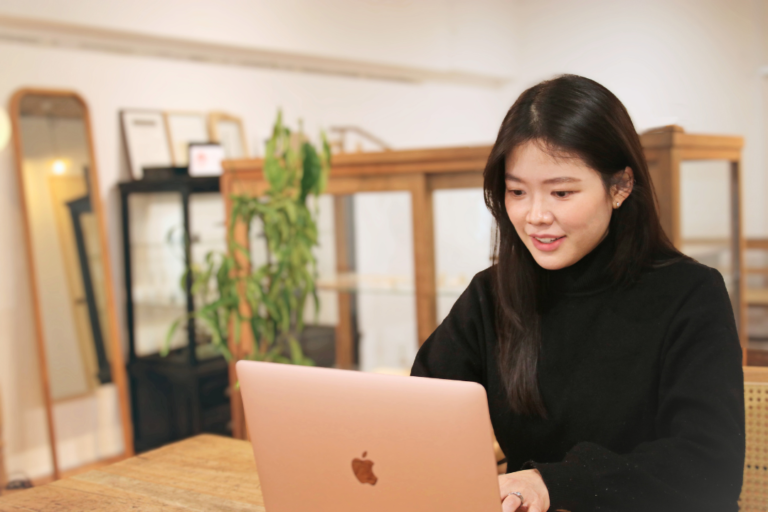
Hello, I’m Shoda, a designer at Fujimori Tokyo.
Since our renewal opening in September, the store has slowly begun to take shape.
I’d love to share a glimpse inside—a space filled with the thoughtful details we cherish.
We begin with the entrance, the face of our shop.
Wondering whether a sliding door might be possible, we asked our construction team on a bit of a whim.
To our delight, they readily agreed, and the result is a serene, distinctly Japanese entryway.
It may not carry the formality of stepping into a tearoom,
but each time we slide open this traditional door, we’re gently reminded to greet our guests with care.
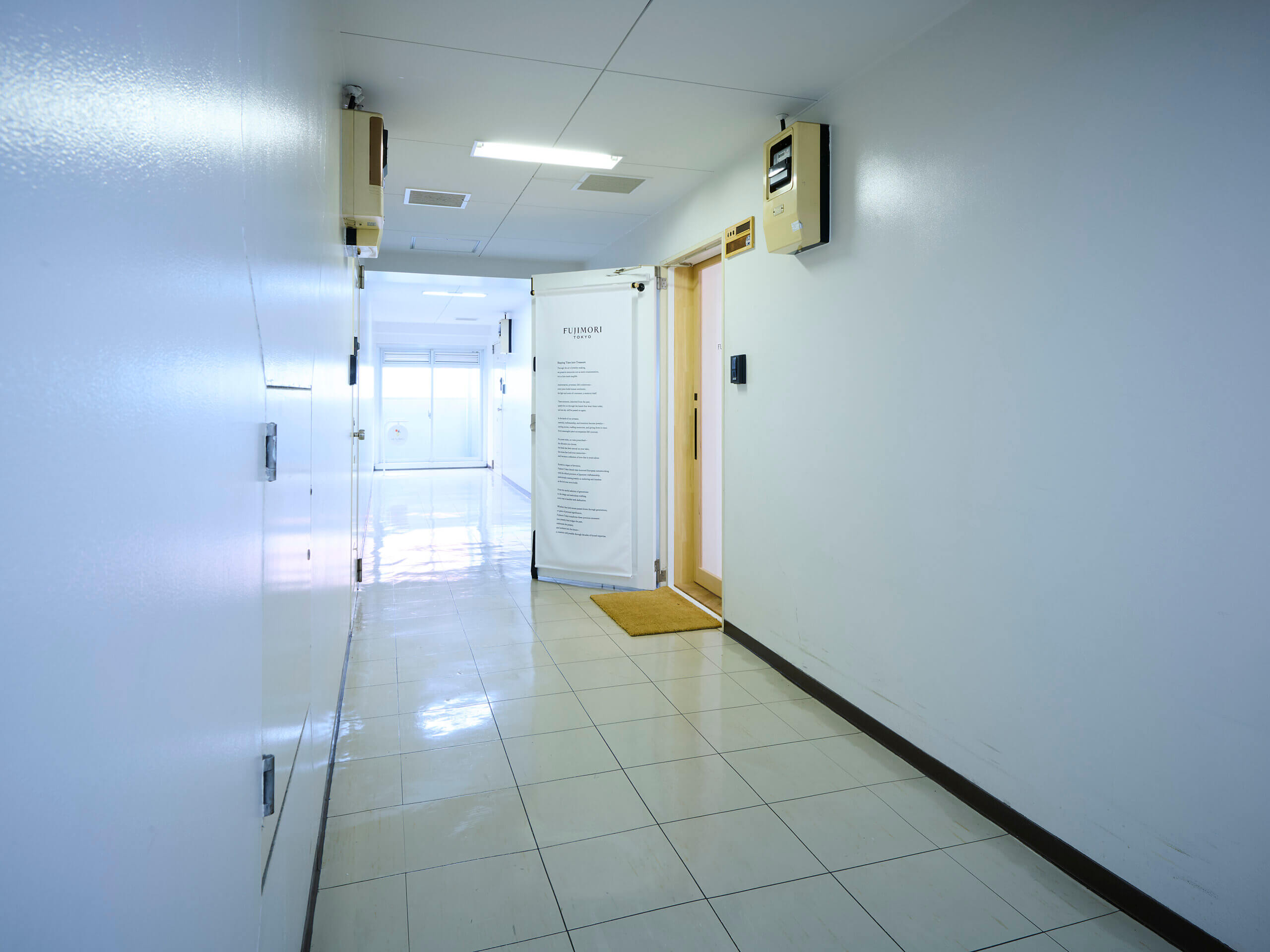
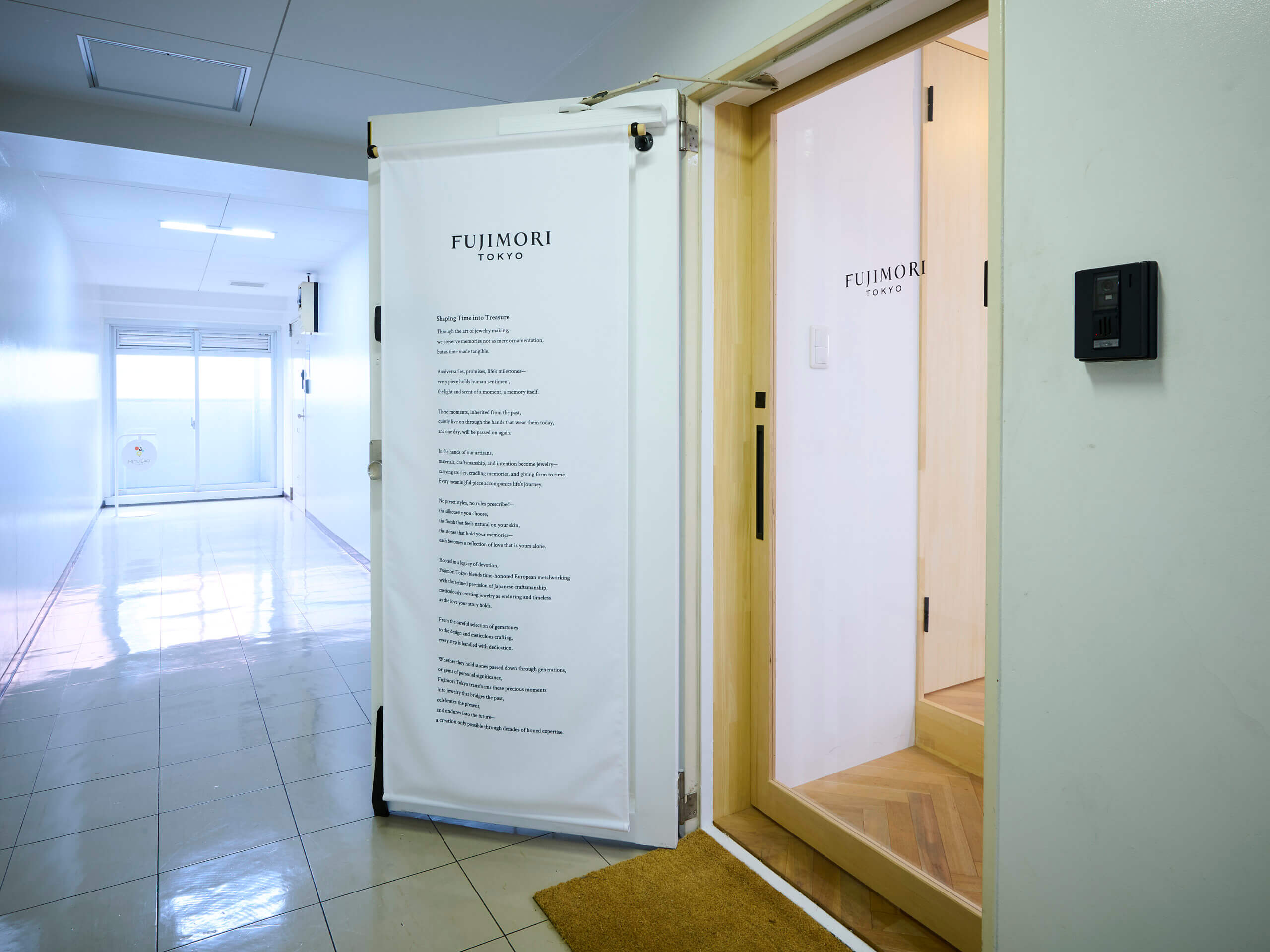
Then came the question of our sign.
We knew we didn’t want anything rigid or formal—only that it should feel soft and gentle.
Fabric, perhaps…?
A noren curtain like the ones hanging at traditional wagashi shops came to mind.
Blending that softness with the quiet, understated presence of the introductory panels you find in exhibitions and galleries,
the idea for our tapestry began to take shape.
We selected a fabric traditionally used for festival garments, woven in a plain weave that combines both thick and slender threads.
The words offer a gentle glimpse into the values and sentiments at the heart of Fujimori Tokyo.
What we love most is the balance it holds—
the tenderness of cloth, paired with the quiet, contemplative tension you might feel in a gallery.
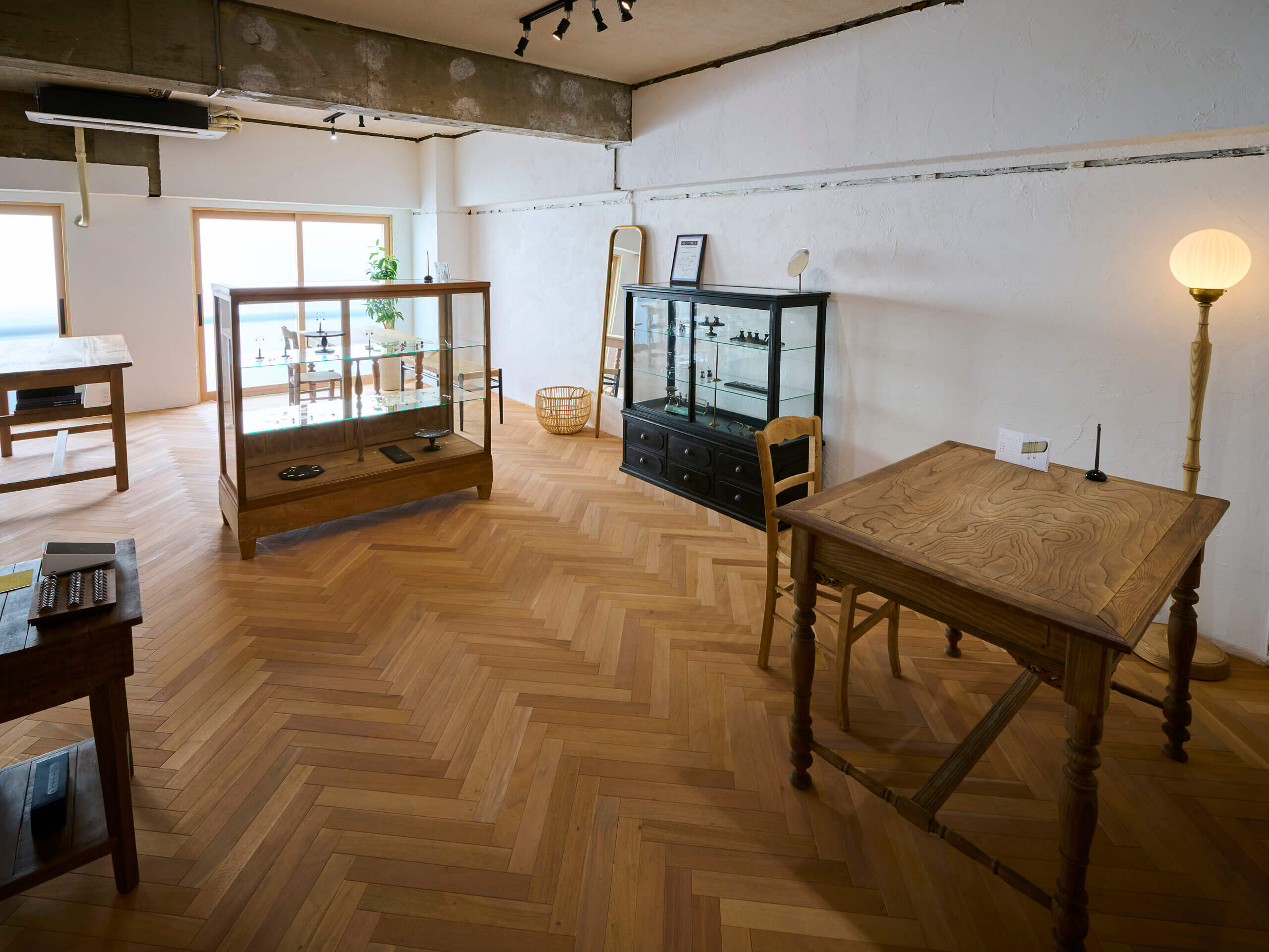
The image we envisioned for the interior was that of a school craft room.
By incorporating unpainted vintage furniture, we hoped to evoke that quiet, nostalgic thrill—the kind you might feel lingering in the corner of your memory from childhood art classes.
Whether new or passed down, even the smallest objects carry a certain weight—and with them, the quiet excitement of creation.
That sense of wonder is something we cherish.
The element we were most particular about was the herringbone flooring.
It’s something we had long admired, so the decision was made almost instantly.
And naturally, we insisted it remain in its untouched, unpainted state.
By unifying the furniture, window frames, and doors in bare, untreated wood, the space naturally takes on the warmth and character of a workshop—soft, understated, and full of quiet elegance.
We handpicked vintage furniture from Japan and France, checking each item in person or through careful inquiry.
What mattered to us was not brand-new furniture, but old pieces thoughtfully maintained over time. Rather than filling the space with brand-new items, we wanted to express this idea by choosing pieces that had been cherished and passed down—items that continue their story here with us.
“Crafting jewelry that carries time forward.”
The same holds true for jewelry. Whether it’s a new creation or a beautifully renewed heirloom, we hope it becomes a piece you’ll treasure for many years ahead.
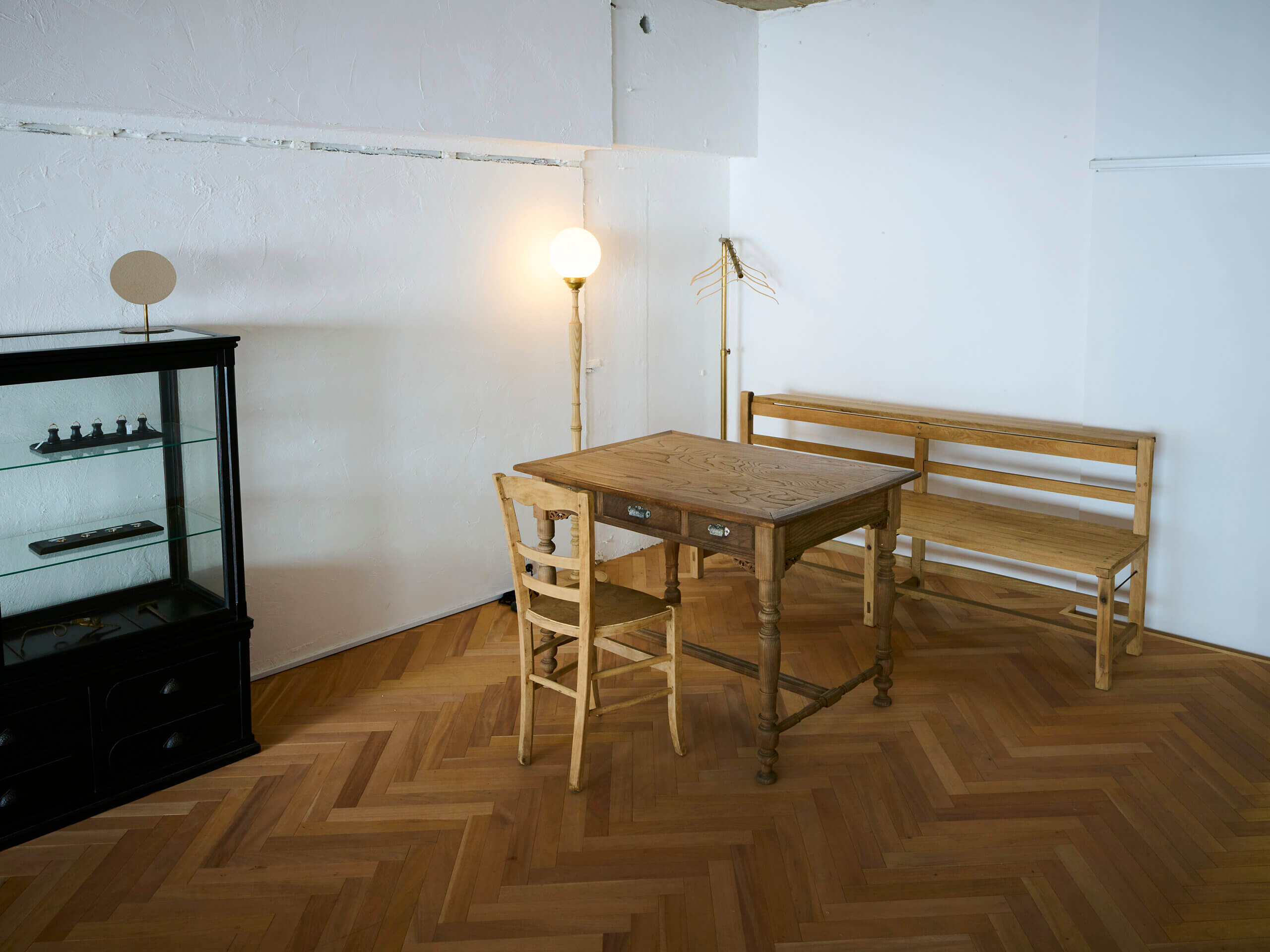
The main table, with its motif reminiscent of a ranma, lends a quiet yet striking presence to this corner of the room.
It has been with us since long before the renovation, and only now does it feel truly at home in its surroundings.
The bench once belonged to a church, and we especially love the bookstand built into its backrest.
Its generous length invites families and groups of friends to sit together comfortably, sharing the space with ease.
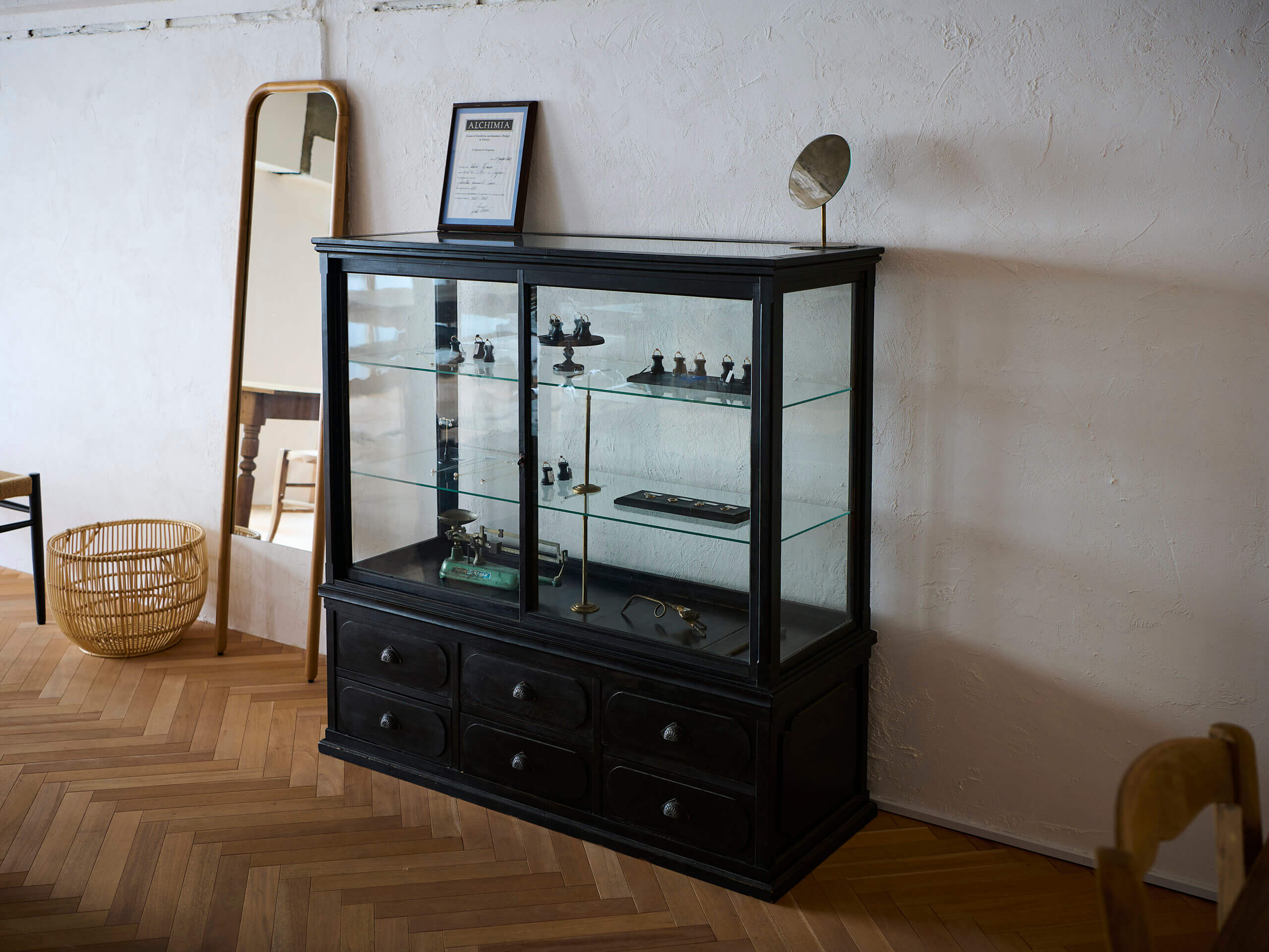
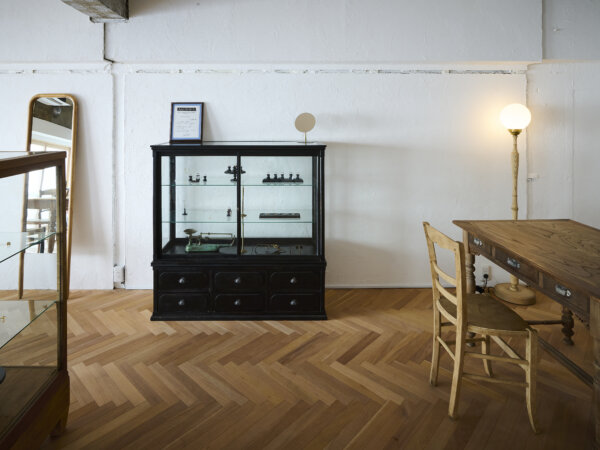
This refined black showcase is another piece of vintage Japanese furniture, carefully restored to new life.
Its charm lies not only in its understated, cool presence, but also in the excellent storage it offers.
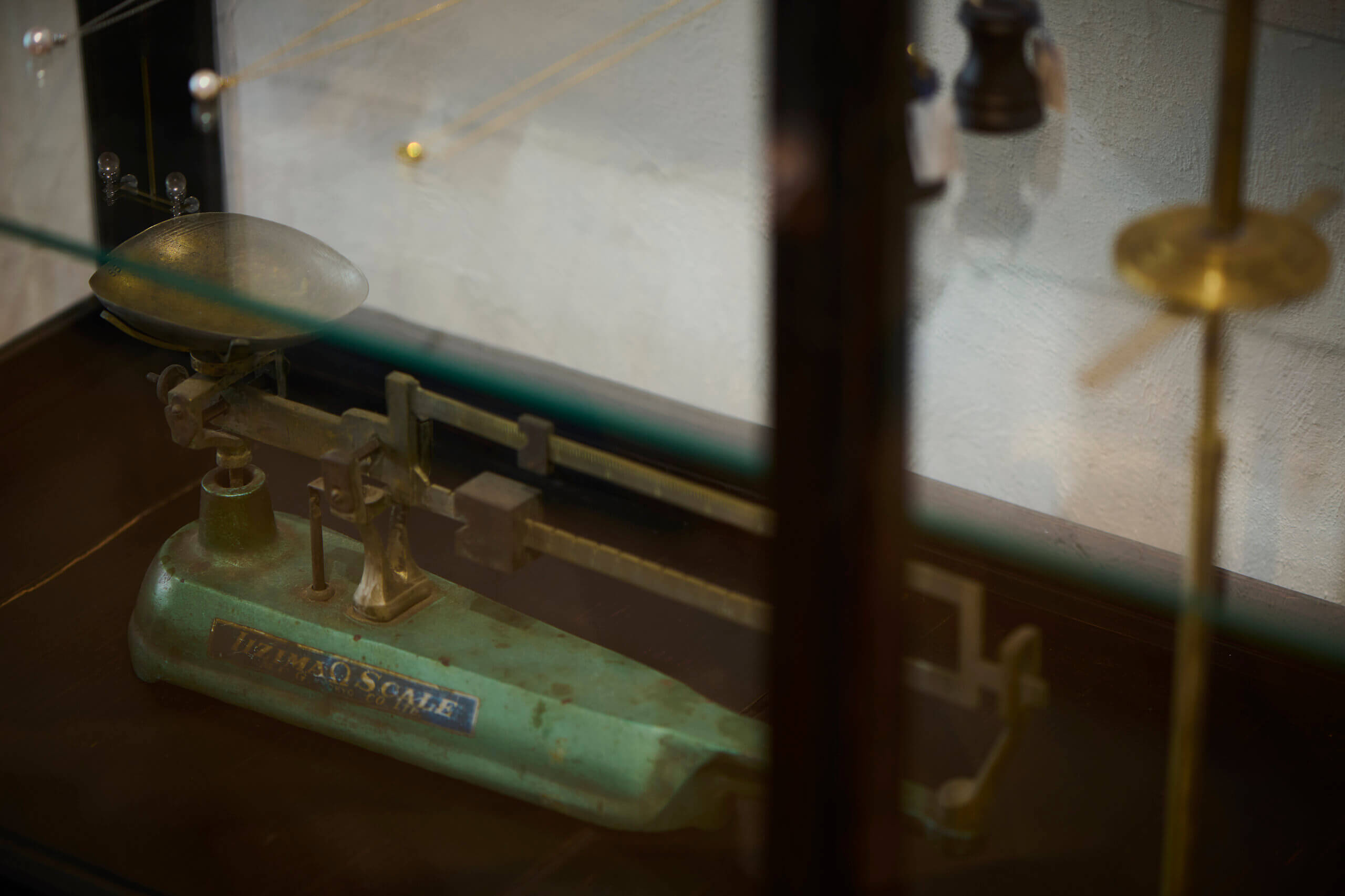
Since the founding of Fujimori Tokyo’s atelier, we have cherished this old scale, passed down to us by a craftsman we’ve known for over fifty years. Its worn surfaces and quiet weight speak of decades gone by, filling the space with a presence that is quietly extraordinary.
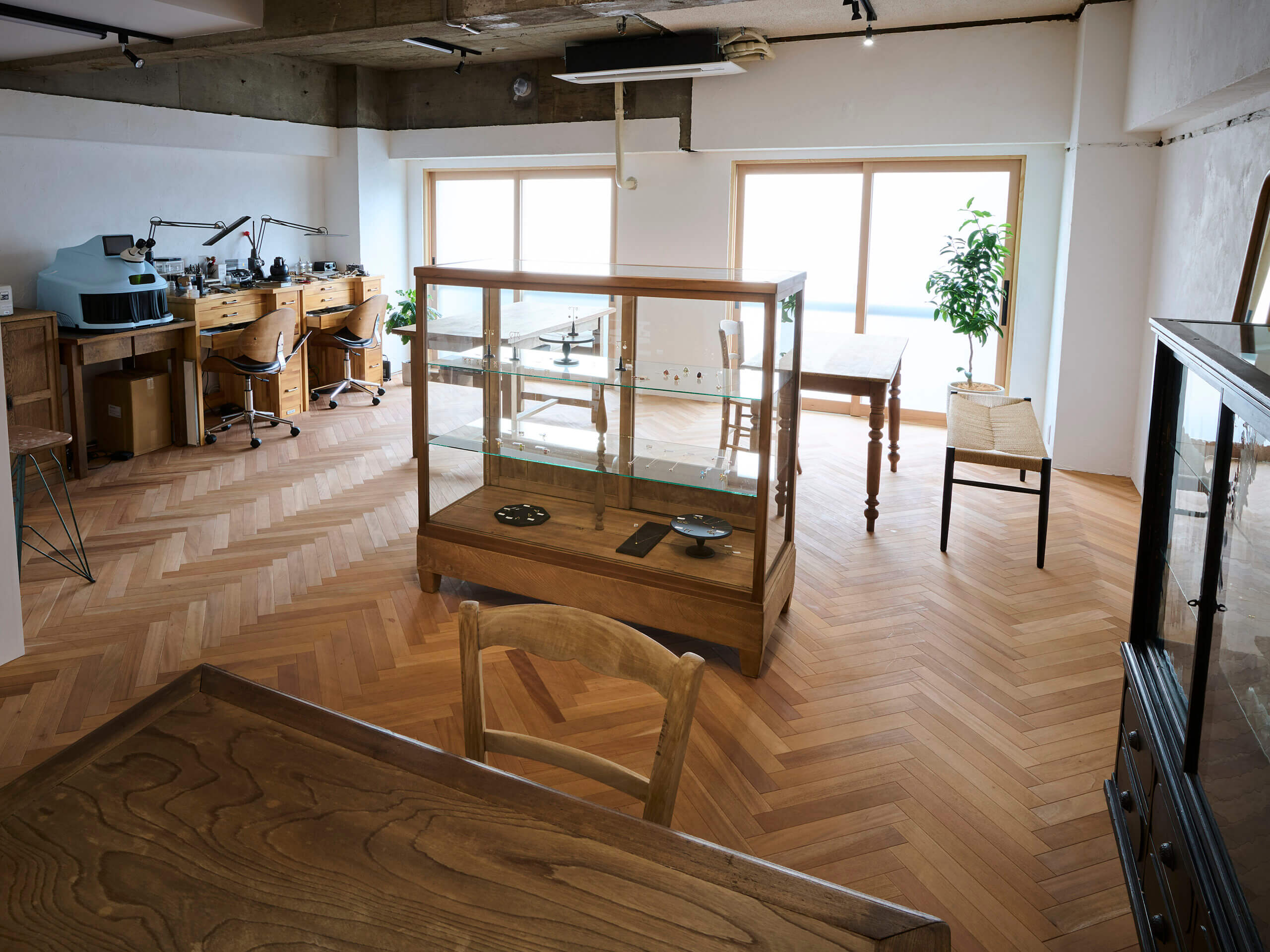
The large showcase, standing proudly at the center of the room, exudes beauty from every angle. Its generous depth makes it a wonderfully practical piece for displaying our jewelry.
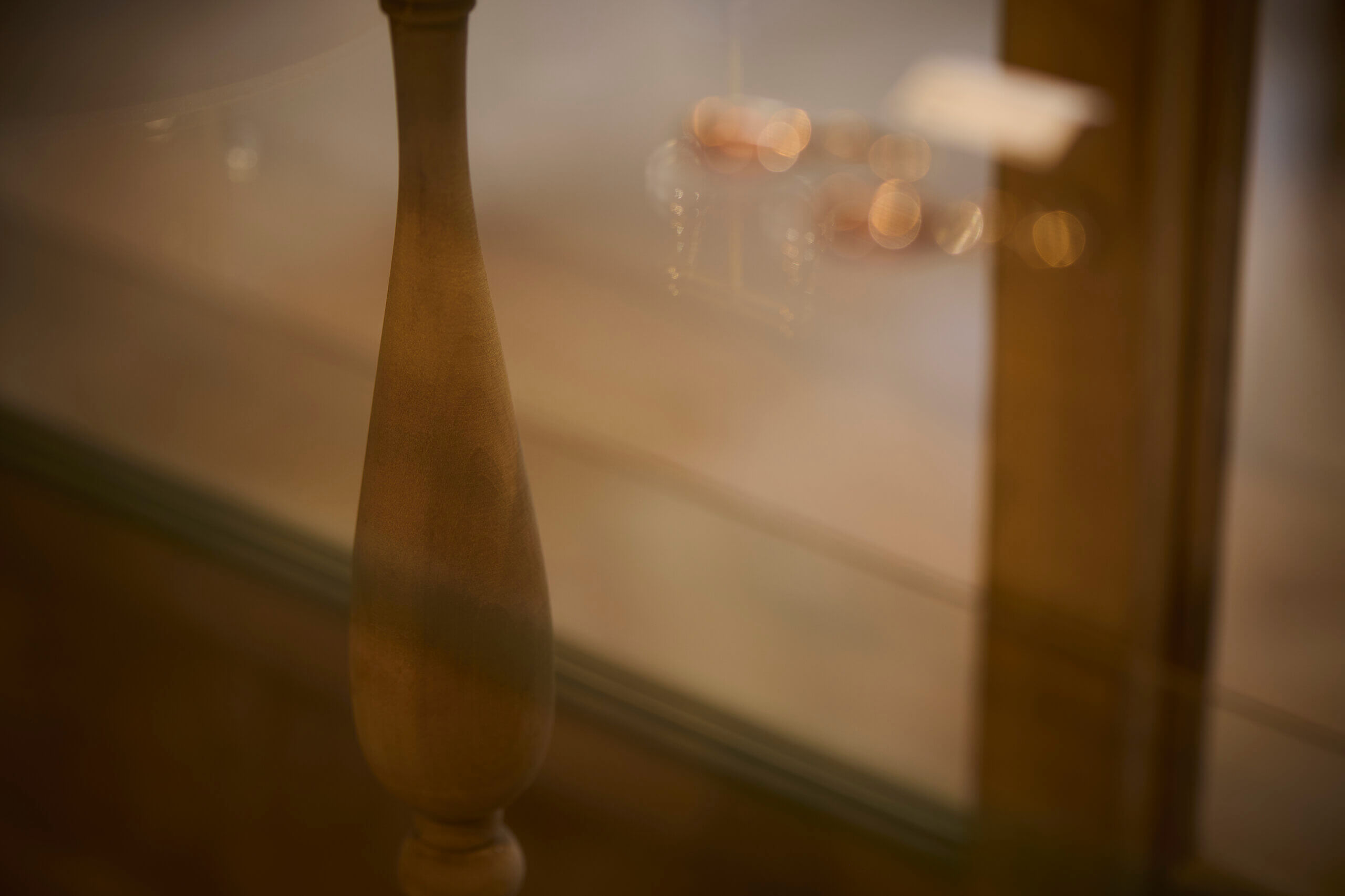
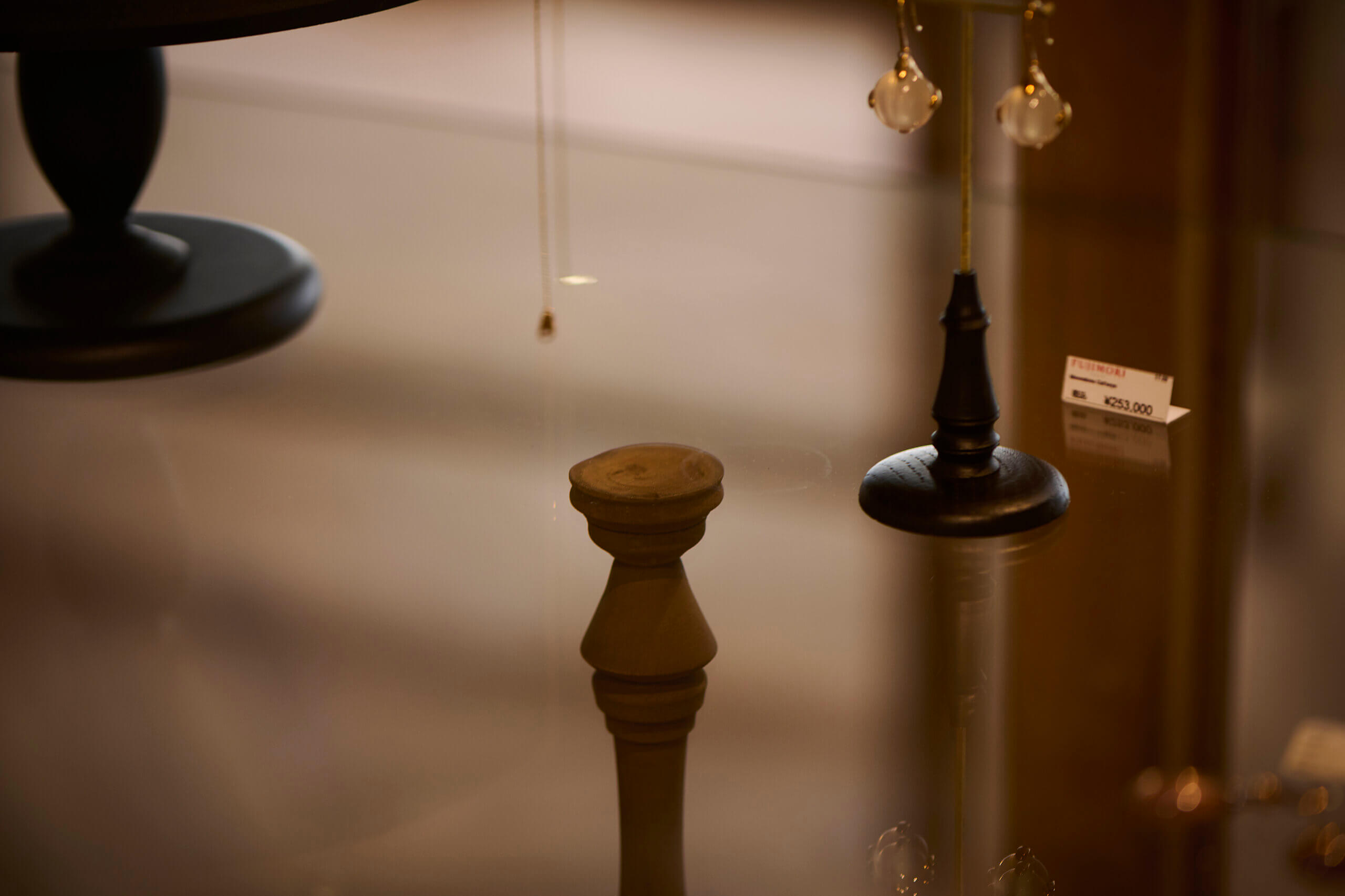
Even the internal posts supporting the glass panes of the showcase are crafted from turned wood.
Their gentle curves add a subtle, elegant accent to the otherwise simple design.
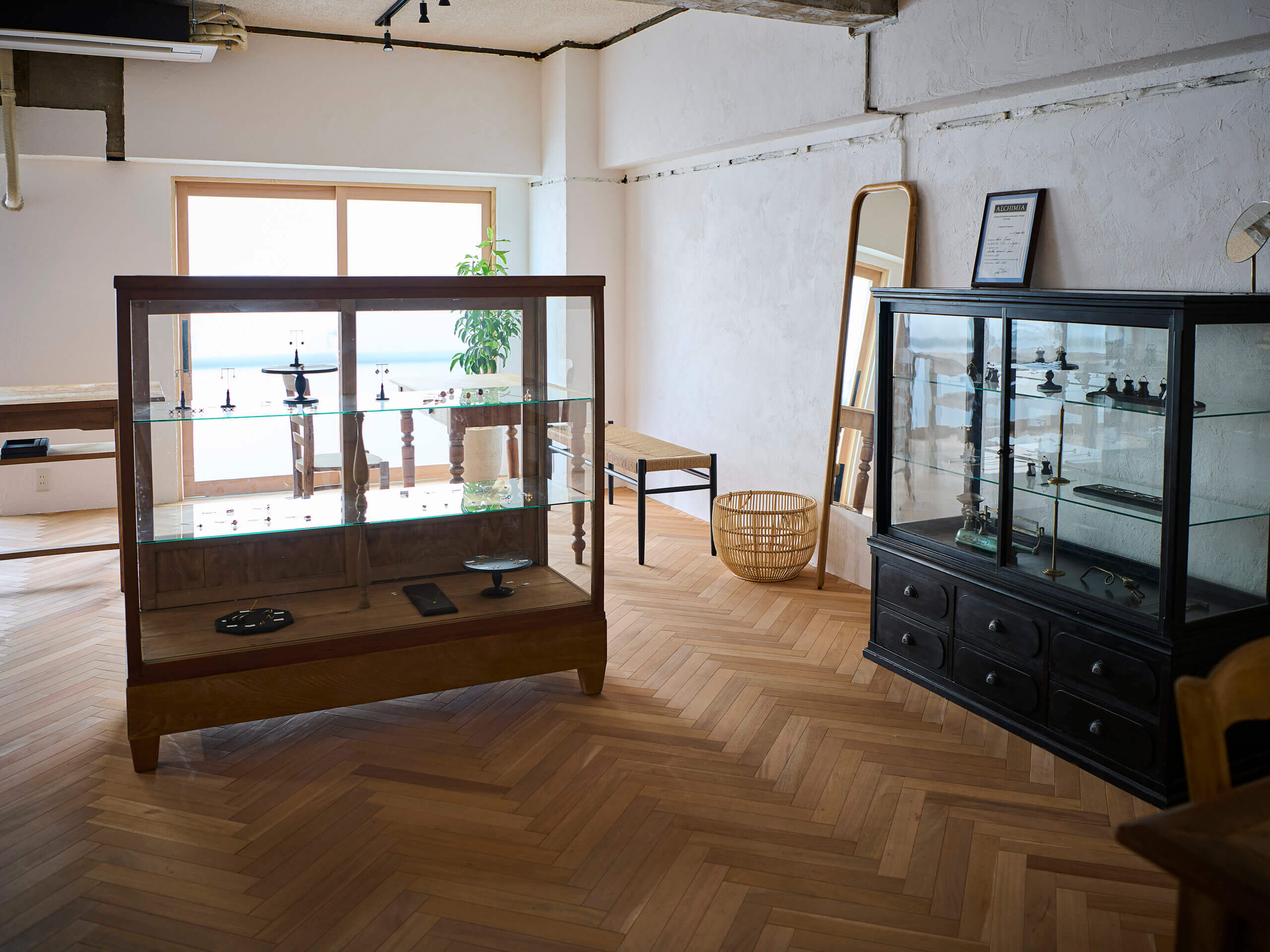
Our two showcases are filled with new creations and bridal pieces, each thoughtfully arranged.
We hope you’ll take your time and enjoy discovering them at your own pace.
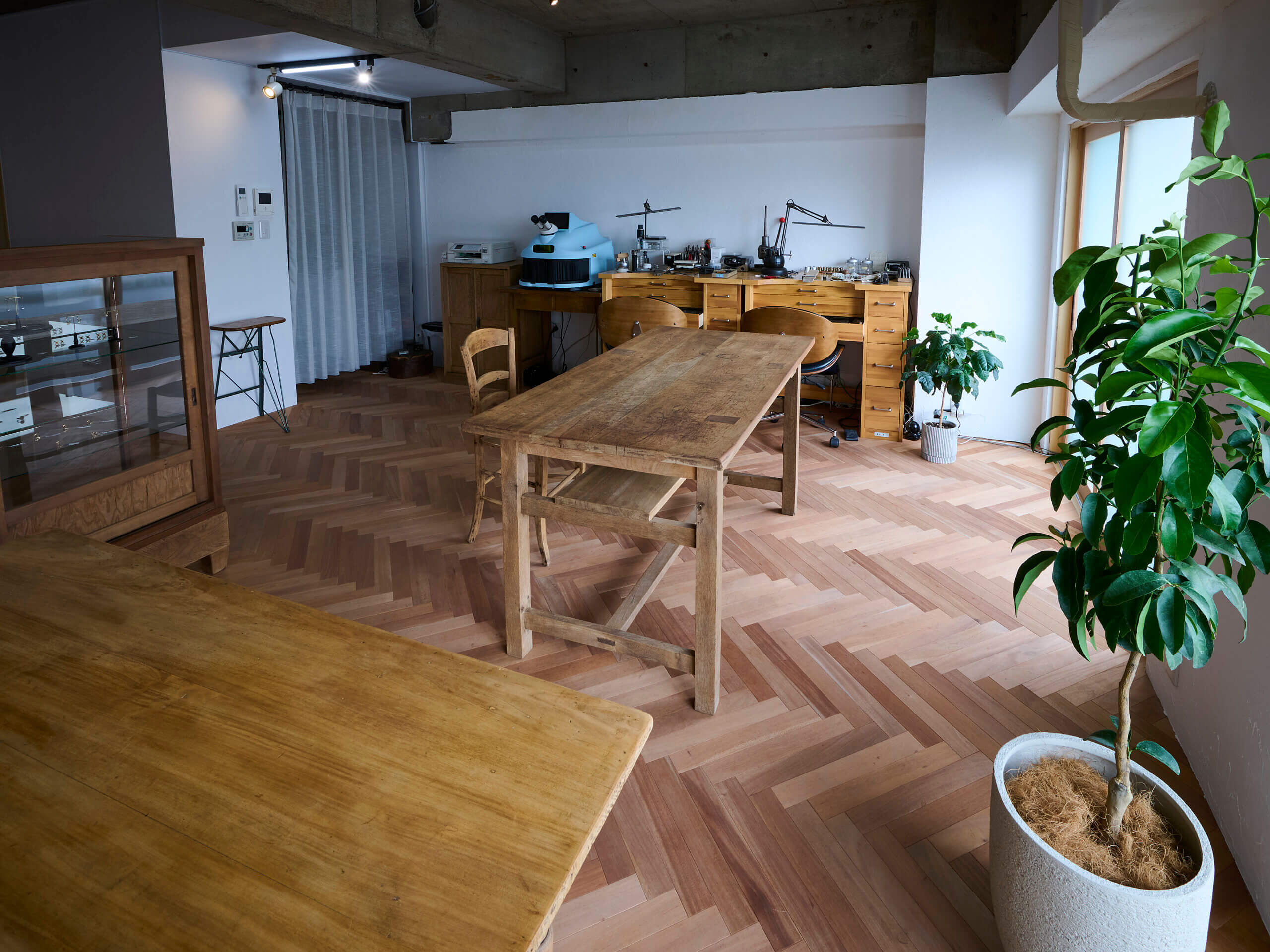
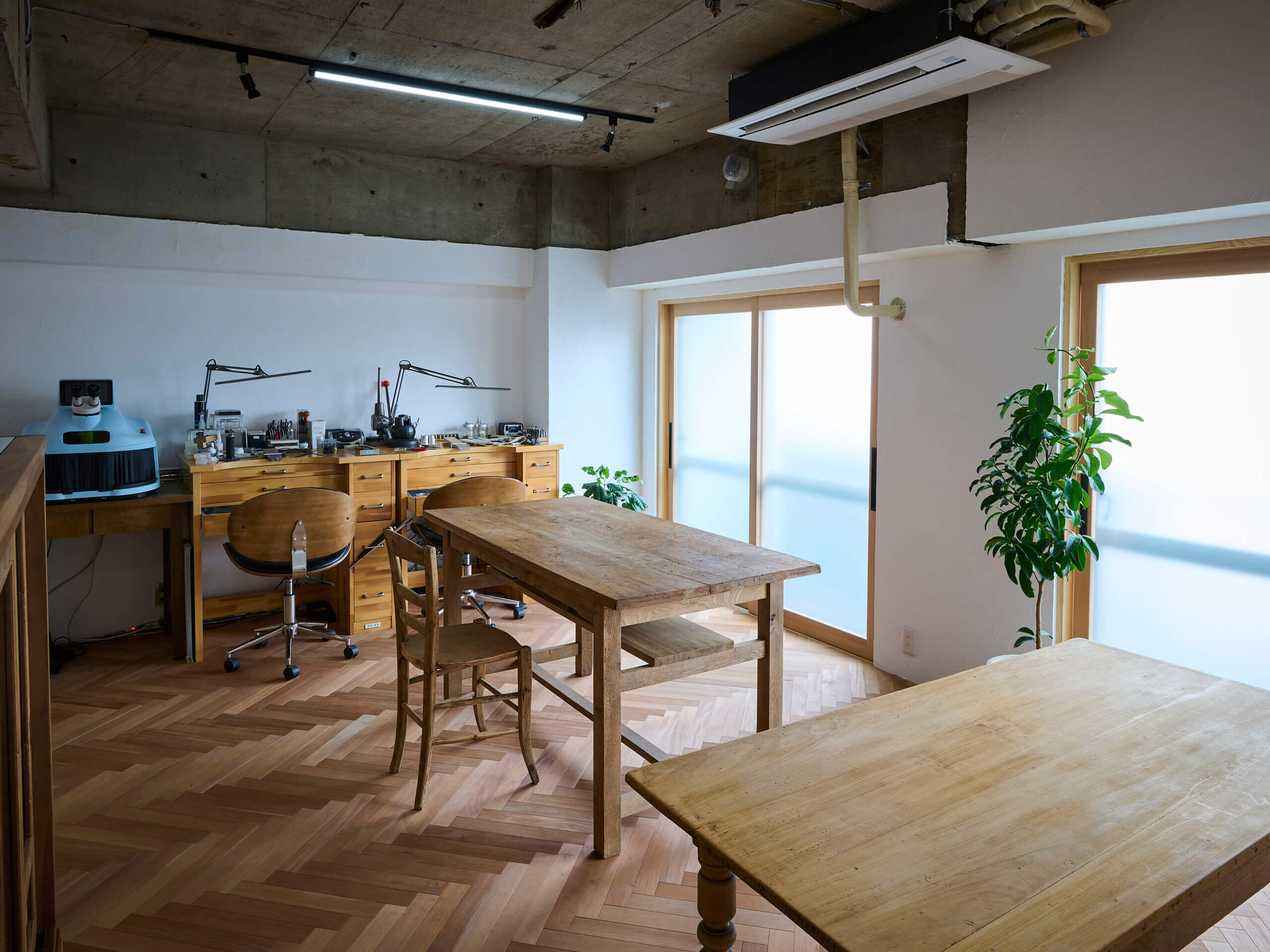
After much searching, we finally found the perfect worktables for our staff.
With their sturdy, unpolished charm, they evoke the feel of a true art room, while offering ample space for three to four people to work side by side.
Like the sliding door at the entrance, the window frames are crafted from raw, unpainted wood.
Soft natural light filters through the frosted glass, casting a gentle, serene glow across the room.
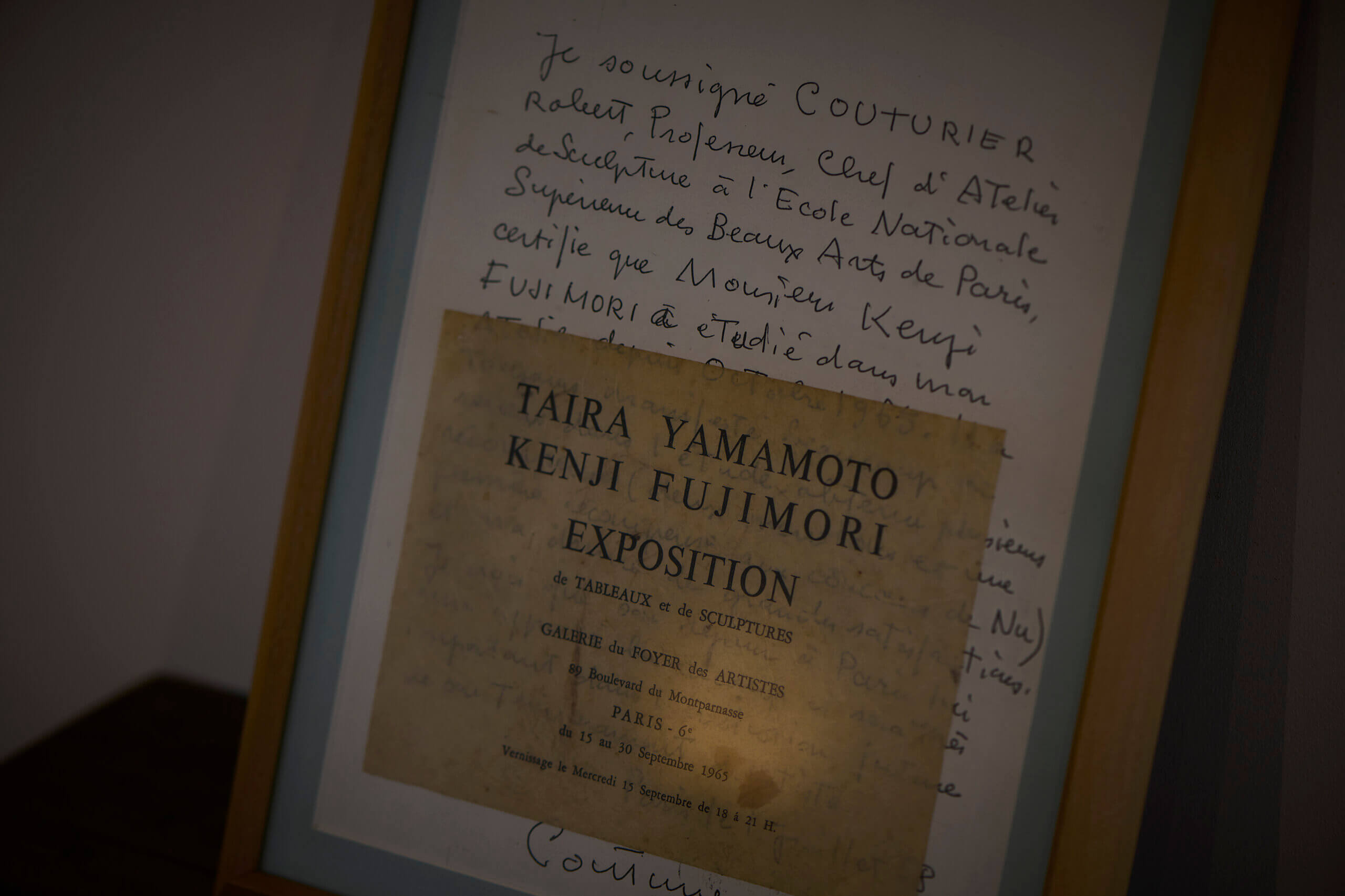
This diploma from a French art school belonged to Han Fujimori, the founder of our atelier.
Alongside it, framed together, is an invitation to a group exhibition he held in Paris—a small glimpse into the beginnings of his creative journey.
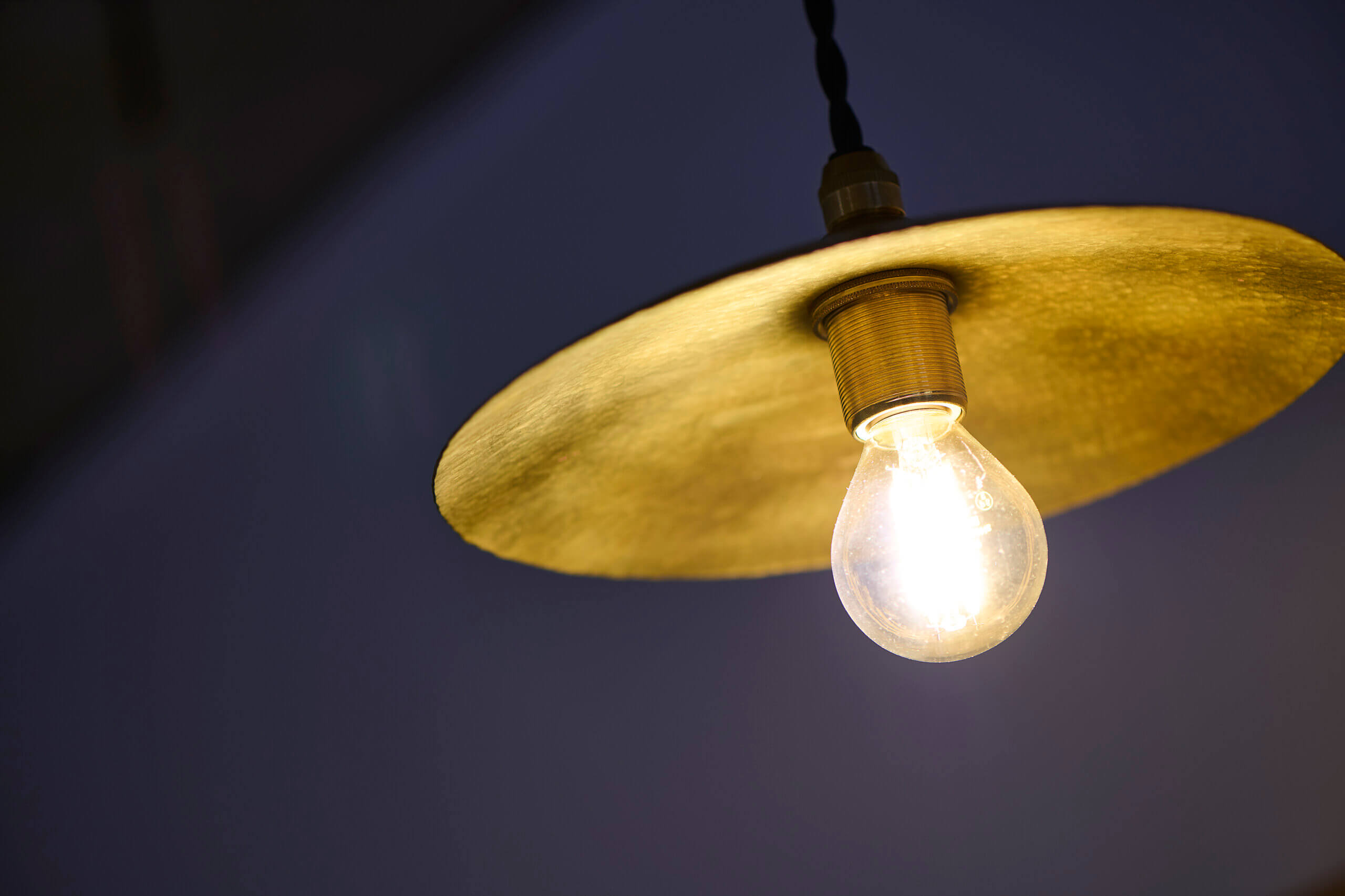

At the entrance, a brass light and a stand lamp reminiscent of traditional Japanese sweets showcase our attention to lighting.
Every corner is designed to be picture-perfect.
May this space, shaped by countless creations and encounters, become a place where meaningful moments are shared and savored.
We look forward to welcoming you to the newly opened Fujimori Tokyo.
Designer Tomoe Shoda