Ring size systems vary around the world, which can make shopping for international jewelry brands or imported rings a little confusing. If you’ve ever wondered, “What would my ring size be in another country?” you’re not alone.
Before choosing a ring, it’s helpful to understand how sizing differs between countries. Let’s start by looking at an international ring size conversion chart featuring the most commonly used sizing systems worldwide.
1. International Ring Size Conversion Chart (JP / US / UK / EU)
| Japan (JP) | United States (US) | United Kingdom (UK) | Europe (EU) |
|---|---|---|---|
| 1 | 1 | C | 41 |
| 1.5 | 1.5 | C+ | 41.5 |
| 2 | 2 | D | 42 |
| 2.5 | 2.25 | D+ | 42.5 |
| 3 | 2.5 | E | 43 |
| 3.5 | 2.75 | E+ | 43.5 |
| 4 | 3 | F | 44 |
| 4.5 | 3.25 | F+ | 44.5 |
| 5 | 3.5 | G | 45 |
| 5.5 | 3.75 | G+ | 45.5 |
| 6 | 4 | G+ | 46 |
| 6.5 | 4.25 | H | 46.5 |
| 7 | 4.5 | H+ | 47 |
| 7.5 | 4.6 | I | 47.5 |
| 8 | 4.7 | I+ | 48 |
| 8.5 | 4.8 | I++ | 48.5 |
| 9 | 5 | J | 49 |
| 9.5 | 5.25 | J+ | 49.5 |
| 10 | 5.5 | K | 50 |
| 10.5 | 5.75 | K+ | 50.5 |
| 11 | 6 | L | 51 |
| 11.5 | 6.25 | L+ | 51.5 |
| 12 | 6.5 | L++ | 52 |
| 12.5 | 6.6 | M | 52.5 |
| 13 | 6.7 | M+ | 53 |
| 13.5 | 6.9 | N | 53.5 |
| 14 | 7 | N+ | 54 |
| 14.5 | 7.25 | O | 54.5 |
| 15 | 7.5 | O+ | 55 |
| 15.5 | 7.75 | O++ | 55.5 |
| 16 | 8 | P | 56 |
| 16.5 | 8.25 | P+ | 56.5 |
| 17 | 8.5 | Q | 57 |
| 17.5 | 8.75 | Q+ | 57.5 |
| 18 | 9 | R | 58 |
| 18.5 | 9.25 | R+ | 58.5 |
| 19 | 9.5 | S | 59 |
| 19.5 | 9.75 | S+ | 59.5 |
| 20 | 10 | T | 60 |
| 20.5 | 10.1 | T+ | 60.5 |
| 21 | 10.2 | T++ | 61 |
| 21.5 | 10.3 | T+++ | 61.5 |
| 22 | 10.5 | U | 62 |
| 22.5 | 10.75 | U+ | 62.5 |
| 23 | 11 | V | 63 |
| 23.5 | 10.25 | V+ | 63.5 |
| 24 | 11.5 | W | 64 |
| 24.5 | 11.75 | W+ | 64.5 |
| 25 | 12 | X | 65 |
*Please note that ring sizes may vary slightly depending on the jewelry brand, ring width, and design, so this international ring size chart should be used as a general sizing guide.
2. How to Measure Your Ring Size Accurately: Tips to Avoid Common Mistakes
While there are many online methods that use string or paper to measure ring size at home, these techniques can easily lead to inaccurate results due to finger shape, measuring pressure, and sizing errors.
For the most accurate ring size measurement, we recommend visiting a nearby jewelry store and using a professional ring sizer (ring gauge).
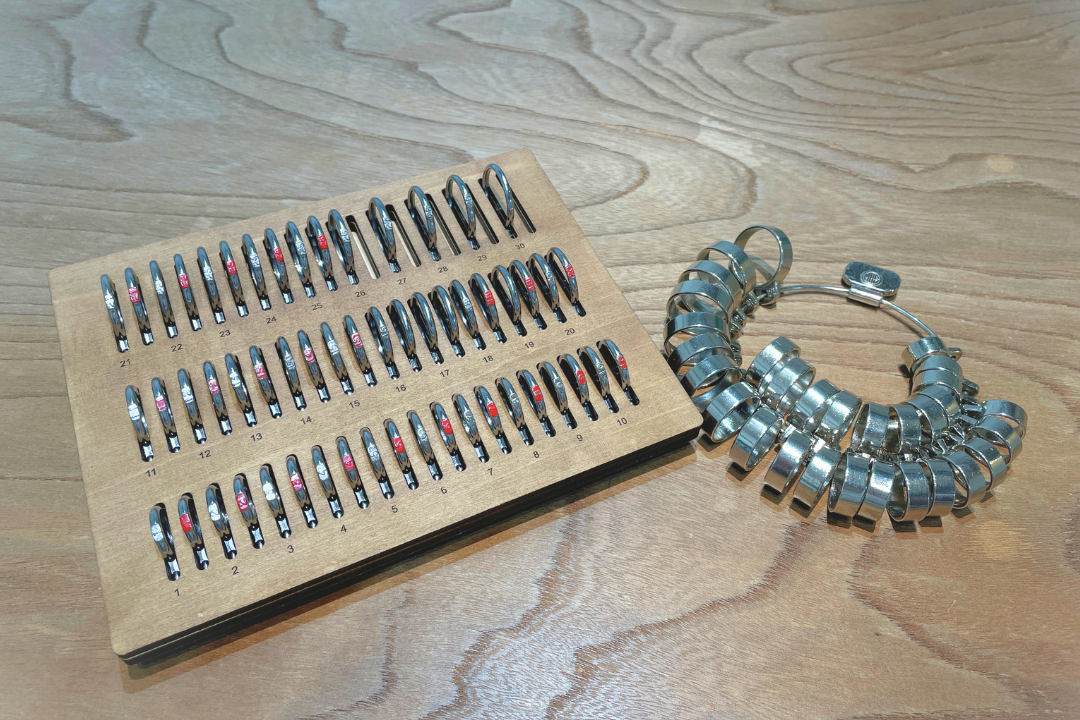
When choosing your ring size, keep the following points in mind for a more comfortable and accurate fit:
① Consider the Ring Design and Width
The wider the ring band, the more surface area it covers on your finger, which can make the fit feel tighter.
- Wide bands (3mm and above):
A ring measured with a standard thin sizing gauge may feel tighter once worn. For the most accurate fit, it’s best to measure your size using a gauge with a similar width to the actual ring. - Slim or V-shaped rings (2mm or less):
Thinner rings tend to slide on more easily and may feel slightly looser compared to wider bands.
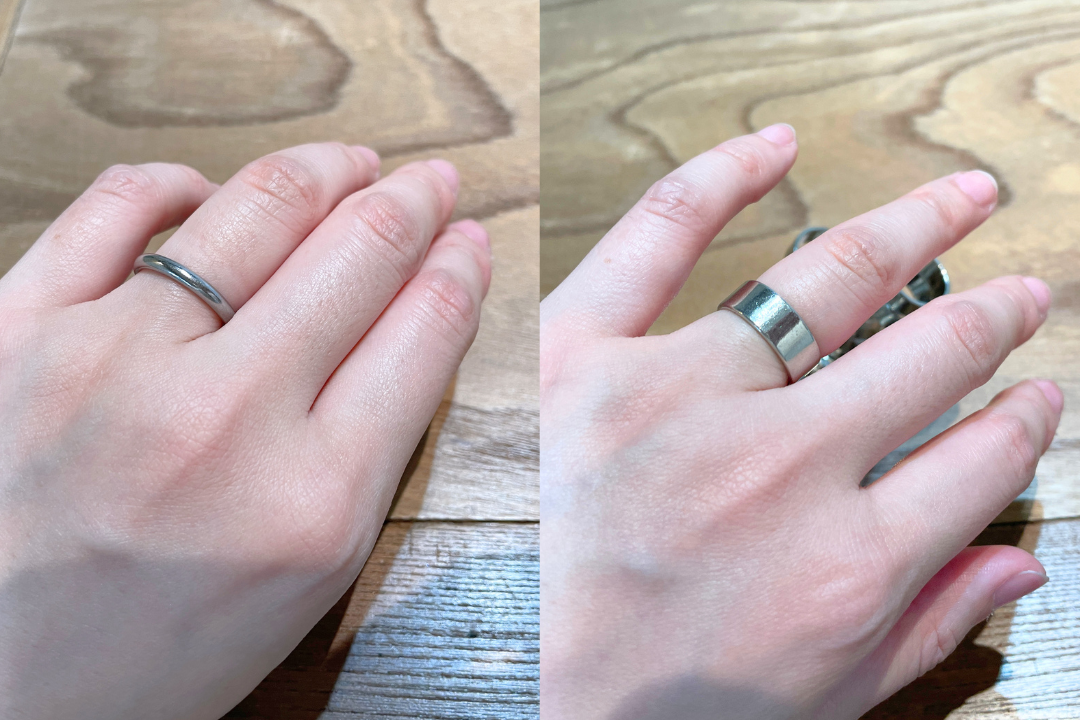
A slimmer ring around 2mm wide (left) may feel slightly looser on the finger, while a wider ring around 4mm (right) can feel noticeably tighter even in the same ring size.
② Consider Your Knuckle Size (Especially Common for Men)
If the base of your finger is relatively slim but your second knuckle is wider, choosing a ring size based only on the base of your finger may make it difficult to put the ring on or take it off. In this case, it’s best to choose a size that can comfortably pass over the knuckle. If the ring feels slightly loose once it reaches the base of the finger, certain ring designs — such as bands with patterns or textures around the entire ring — can help reduce noticeable spinning and improve comfort.
3. How Ring Size Changes with Your Body and the Seasons
Did you know, your finger size is not constant throughout the day or year?
- Daily changes:
For some people, ring size can fluctuate by about half to one full size between morning and evening due to swelling and body temperature changes. - Seasonal and climate changes:
During summer, heat and increased water retention can cause fingers to swell more easily. In winter, colder temperatures and dry air may make fingers appear slimmer. Ring fit can also feel different depending on the climate, especially when traveling between humid and dry countries.
Try checking your ring size at different times of the day or during different seasons. Comparing multiple measurements is one of the best ways to find the most comfortable and accurate ring size.
4. Our Aftercare Service & Our Approach to Ring Resizing
At Fujimori Tokyo, we want your ring to be cherished and worn comfortably for a lifetime. That’s why we continue to provide thoughtful aftercare support long after your purchase.
✨ Complimentary Ring Resizing Support ✨ We offer free ring resizing within ±3 sizes.
However, there is one important thing we would like our customers to understand about ring resizing.
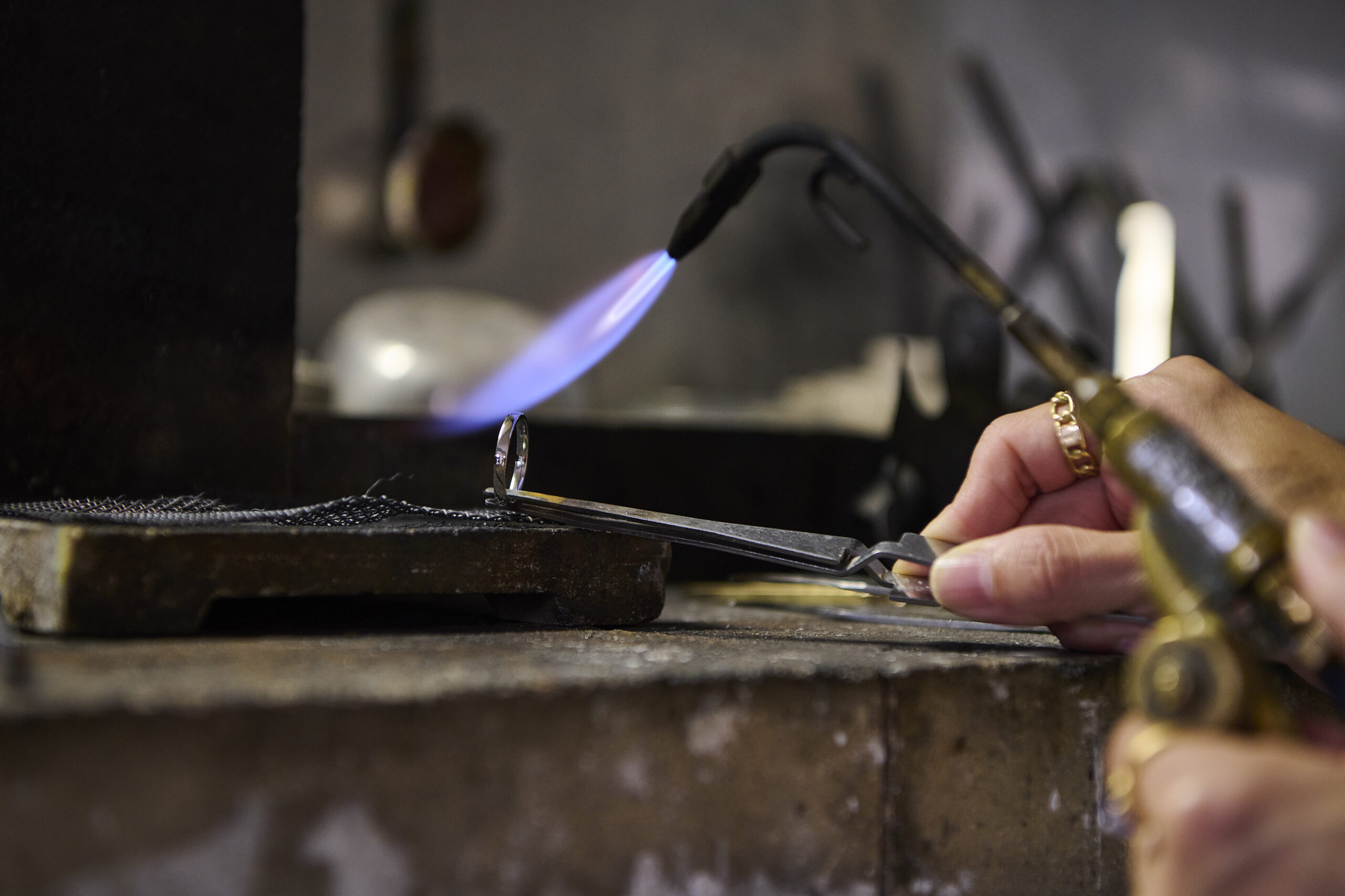
Resizing a ring involves cutting the band, applying heat, and soldering it back together. While our skilled artisans carefully perform this process with precision, resizing can still place some stress on the metal.
To help maintain the strength, durability, and long-term beauty of your ring, we believe it is best to minimize the number of resizing adjustments whenever possible.
Even if your ring feels slightly different at first, we recommend wearing it through all four seasons before deciding on a resize, as finger size can naturally fluctuate throughout the year due to temperature and lifestyle changes.
If you still feel an adjustment is needed, our team will always be here to support you.
Summary
A ring is more than just jewelry — it’s a meaningful piece you’ll wear and cherish every day. Finding the right ring size is an important step toward choosing a ring that feels comfortable, personal, and truly yours.
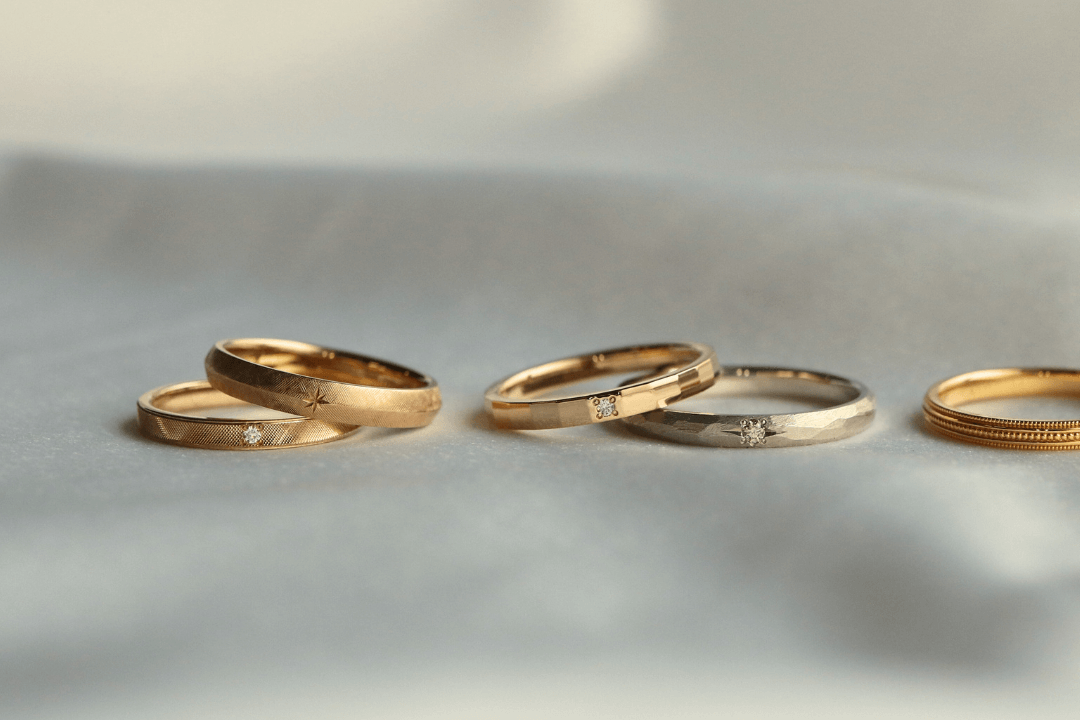
If you have any questions about ring sizing, fit, or choosing the right design, feel free to contact us anytime via LINE or visit us in store. We’ll be happy to help you find the perfect ring.