Why Is Kofu Known as Japan’s Gemstone-Cutting Capital?
Kofu’s legacy as a lapidary hub dates back centuries to its origins as a rich quartz mining region. The abundance of raw rock crystal fueled a thriving culture of gemstone cutting ateliers that flourished over generations. Today, local artisans continue to hone and perfect these time-honored lapidary techniques, preserving a proud heritage of Japanese precision craftsmanship.
For many years, we have proudly featured these exceptional loose gemstones crafted in Kofu in our custom jewelry designs.
Recently, we had the privilege of visiting Shimizu Kiseki, a renowned lapidary atelier nestled in Kofu City, Yamanashi Prefecture.
Famous for their signature proprietary gemstone cuts, they craft exquisite pieces that draw orders from jewelry designers and collectors across Japan and around the globe.
Inside the Gem Vault: A Museum-Like Storage Room
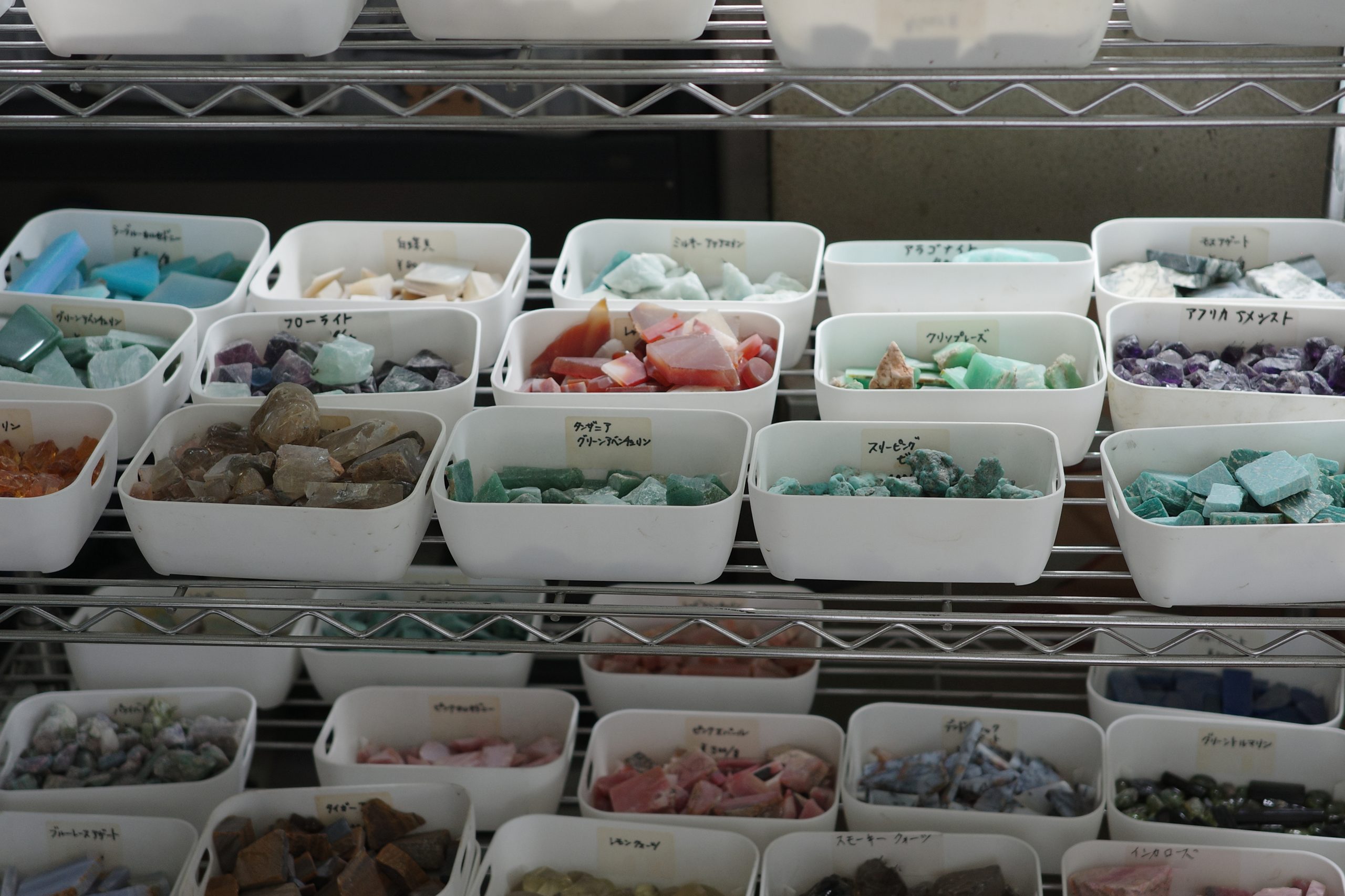
Our tour began in the room where the rough gemstones are kept.
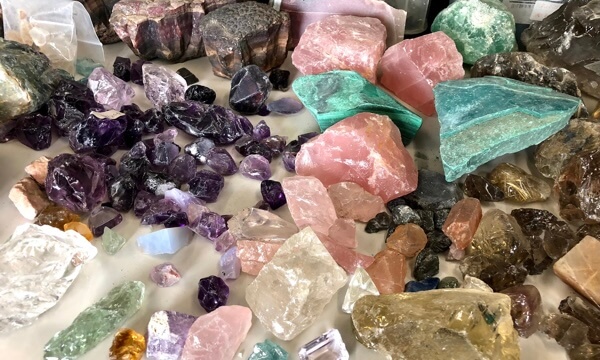
Cases meticulously organized by stone variety line the space, filled with rough specimens gathered from every corner of the globe.
Resting like museum exhibits, they quietly wait for their turn to be cut and polished into finished gems.
Uncompromising Precision: Watching the "Sakura in Cut" Come to Life
Next, we stepped into the workshop where the lapidary artisans work their magic.
During our visit, we had the privilege of observing the polishing process for one of Shimizu Kiseki’s most iconic creations: the "Sakura in Cut." This enchanting cut creates the illusion of a delicate cherry blossom blooming inside the gemstone—a technique that demands absolute, unwavering precision with zero room for error.

The "Sakura in Cut" is defined by five cherry blossom petals that bloom outward from the gemstone's culet, clearly visible when viewed from above.
While machinery assists with fine technical adjustments, the vast majority of the process relies entirely on the artisan’s intuitive feel—a sensitivity honed over years of hands-on experience. It is a true testament to the mastery of Japanese craftsmanship.
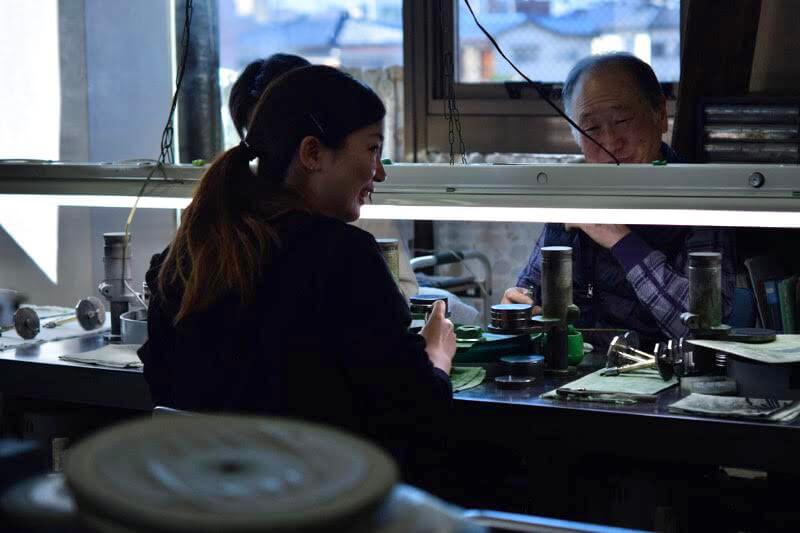
After the initial rough faceting, three artisans polish the stone through sequential stages, moving to progressively finer abrasives at each step.
It is a meticulous, labor-intensive team effort: the cherry blossom petals are left with a slightly coarser, frosted finish, while the surrounding facets are polished to a high shine.
Even a split-second shift in angle or pressure can ruin the shape of the petals—a testament to just how remarkably delicate this cut is.
Controlling the tool against the lap wheel with such precision can only be achieved through years of experience; it is master craftsmanship in its purest form.
To achieve such a pristine cut, the artisans meticulously calibrate every detail, carefully balancing angles and precise proportions much like a classic brilliant cut.
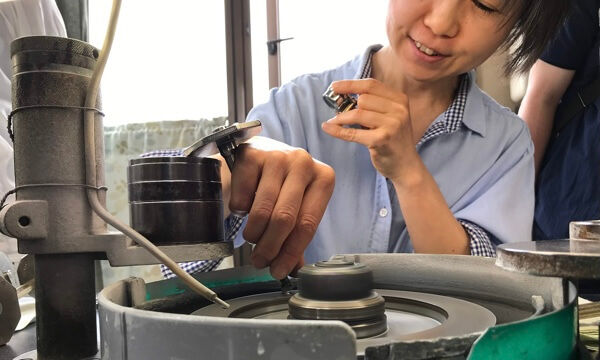
Watching the cherry blossom pattern emerge while preserving the stone's vivid color was a powerful reminder of what lapidary art is truly about: bringing out a design's beauty while maximizing the gemstone's rich color and carat weight.
Surrounded by stacks of rough stones, the quiet workshop where the artisans worked carried a warm, welcoming atmosphere—feeling almost like a family home.
Seeing how much care and devotion goes into cutting each gemstone filled us with a renewed sense of pride and purpose, inspiring us to craft these stones into finished jewelry with that exact same level of dedication.
"Sakura in Cut" Jewelry and Our Craft Philosophy
Having captured attention from gemstone lovers worldwide, the "Sakura in Cut" currently carries a production wait of around four to five months. Since our founding in 1970, Fujimori Tokyo has had the honor of carefully setting each of these precious, individual gems into finely crafted jewelry.
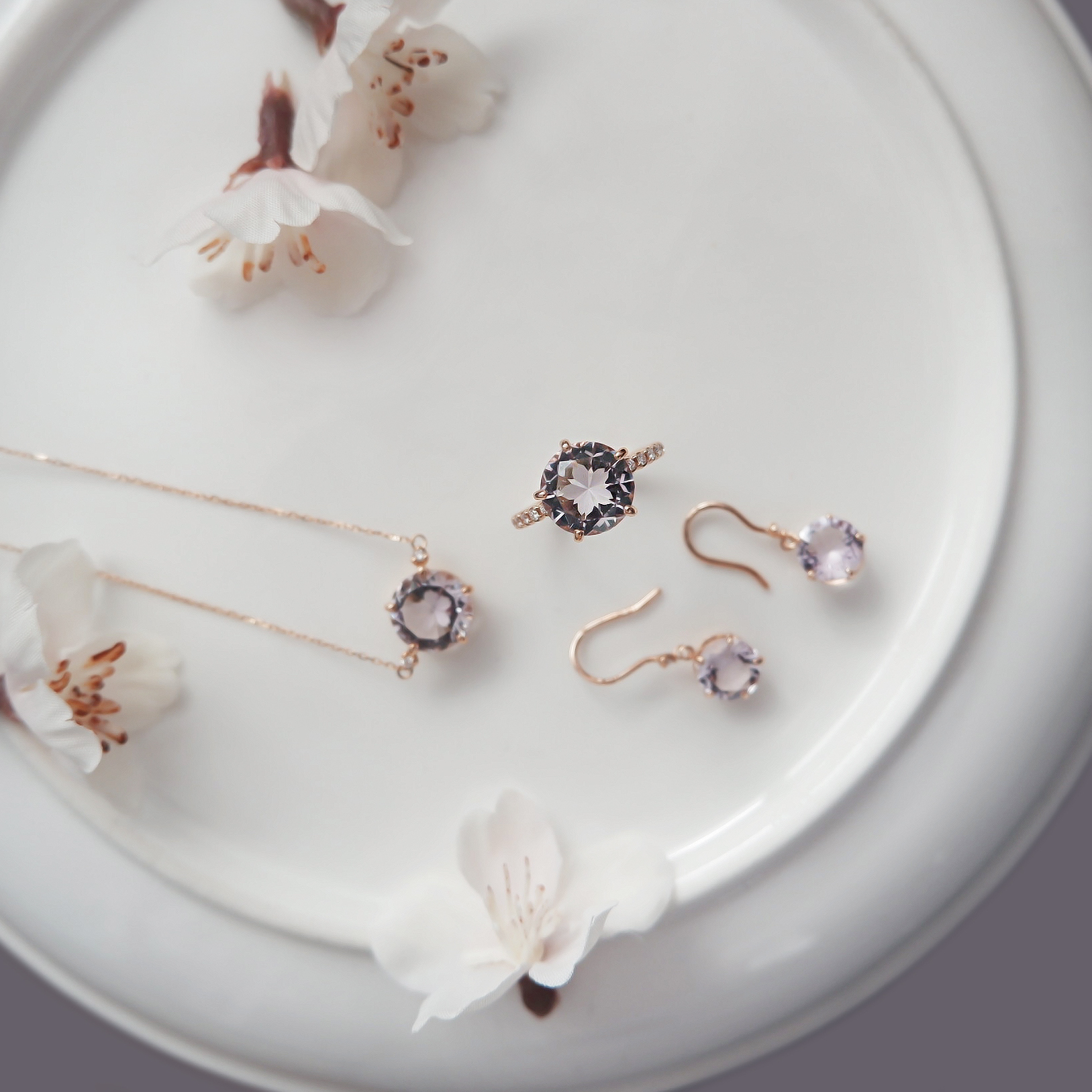
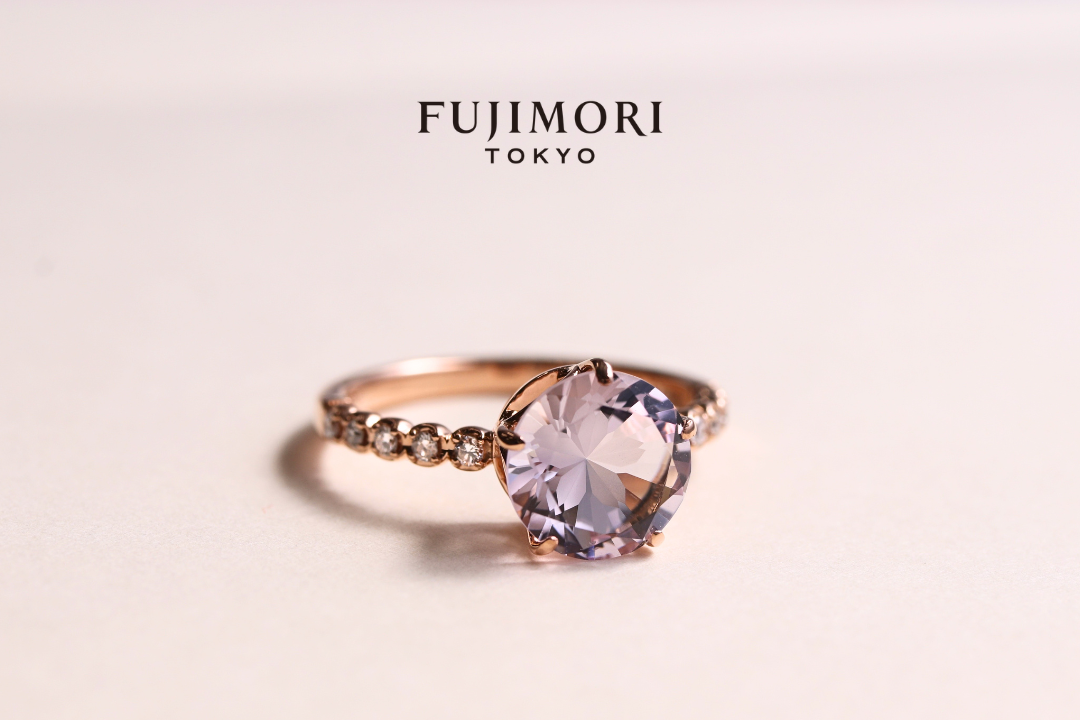
Pink amethyst "Sakura in Cut" with a subtle, sparkling diamond accent.
We deliberately select gemstones generous enough in size for the intricate cherry blossom motif to be clearly admired—creating a piece that truly exemplifies the sophistication of Japanese hand-craftsmanship.
The loose stone used is sized so that the cherry blossoms are clearly visible.
Passing fine jewelry down through generations has always been central to our atelier's values.
By working with these extraordinary stones,
we also consider it our mission to honor and help pass down Japan’s remarkable lapidary traditions to the future.
Interested in the Himitsu Sakura Collection?
We would love to hear from you and answer any questions you may have. 🌸